







- By saad seo
- October 22, 2026
- Uncategorized
Caring for an elderly loved one can be rewarding, but it can also bring physical, emotional and practical challenges. Family carers often balance appointments, household responsibilities, work and their loved one’s daily care needs. Over time, managing everything without enough support can become difficult.
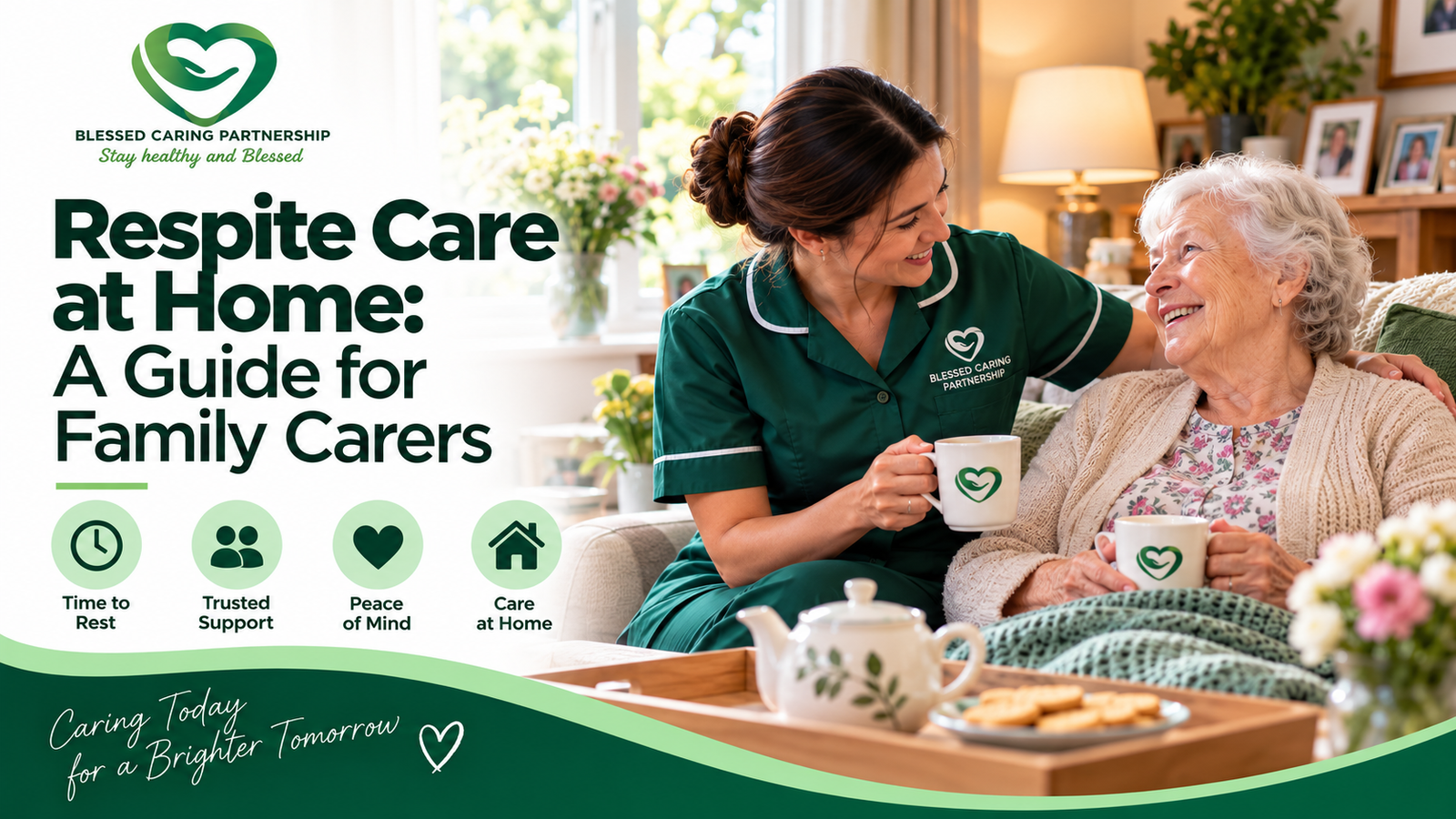
Respite care at home offers families an opportunity to take a break while ensuring their loved one continues to receive appropriate care in familiar surroundings.
At Blessed Caring Partnership, we understand the importance of compassionate, personalised support for both individuals receiving care and the family members who care for them. This guide explains what respite care at home involves, who may benefit from it and how families can arrange suitable support.
What Is Respite Care at Home?
Respite care at home is temporary care provided to an individual so that their usual family carer can take time away from their caring responsibilities.
Depending on the person’s needs and the agreed care arrangements, support may include assistance with personal care, meals, mobility, companionship and daily routines.
Rather than requiring an older adult to leave their familiar surroundings, home-based respite care can help them remain comfortable in their own home while their usual carer takes a planned break.
The type and duration of care can vary. Some families may need a few hours of support, while others may require more extensive arrangements.
Why Is Respite Care Important for Family Carers?
Family carers often put their loved one’s needs first. However, caring responsibilities can affect their own wellbeing, personal commitments and ability to maintain a healthy routine.
Respite care can help families manage these responsibilities more sustainably.
1. Time to Rest and Recharge
Taking time to rest, attend appointments or enjoy personal activities can help family carers maintain their own wellbeing. A planned break can also provide an opportunity to return to caring responsibilities feeling better supported.
2. Support With Everyday Responsibilities
Family carers may need time to manage work, household tasks or other family commitments. Respite care can provide practical assistance while ensuring their loved one’s agreed care needs continue to be addressed.
3. Greater Peace of Mind
Knowing that a suitable care arrangement is in place can help families feel more confident about taking time away. Clear communication about routines, preferences and care requirements is an important part of this process.
4. More Sustainable Family Care
Respite care can complement the support already provided by relatives. It does not replace the relationship between a family carer and their loved one; instead, it can help families share caring responsibilities more effectively.
Who Can Benefit From Respite Care at Home?
Respite care may be useful in a range of situations, depending on the individual’s care needs and the support available from family members.
Older Adults Who Need Daily Assistance
An older adult who needs help with personal care, preparing meals, mobility or daily routines may benefit from temporary support when their usual carer is unavailable.
Individuals Living With Long-Term Conditions
People living with chronic health conditions or complex care needs may require consistent support. Any respite arrangement should reflect their assessed needs, relevant care plans and the level of expertise required.
Families Supporting Someone With Dementia
Families caring for a person with dementia may need occasional breaks from their responsibilities. Familiar routines, clear communication and a suitable caregiver can help make the transition more comfortable.
Family Carers With Work or Personal Commitments
Appointments, employment, family events and other responsibilities can make it difficult to provide care at every moment. Planned respite support can help families manage these commitments.
The most suitable arrangement depends on the individual’s needs, preferences and any relevant clinical or safety requirements.
What Does Respite Care at Home Include?
The support provided depends on the person’s circumstances and the agreed care plan. It may include the following services.
Personal Care
Assistance with agreed daily activities such as washing, dressing, grooming and maintaining personal hygiene while respecting dignity and privacy.
Meal Preparation and Hydration
Help with preparing suitable meals, offering drinks and following any relevant dietary guidance included in the care plan.
Mobility Assistance
Support with moving around the home and following agreed mobility arrangements. Any specialist equipment or moving-and-handling needs should be assessed and managed appropriately.
Companionship
Friendly conversation and suitable activities can help individuals feel supported and maintain social connection during a family carer’s absence.
Medication Support
Where included in the care plan and within the carer’s training and responsibilities, support may involve medication reminders or assistance with prescribed medication according to agreed procedures.
Support With Daily Routines
Maintaining familiar routines around meals, rest, personal care and activities can help an individual feel more comfortable when their usual carer is away.
Not every service is appropriate for every person. The support plan should reflect the individual’s assessed needs and the care provider’s capabilities.
How to Arrange Respite Care for an Elderly Loved One
Arranging respite care can feel overwhelming at first, especially when a family has not used professional home care before. Breaking the process into manageable steps can make it easier.
Step 1: Identify the Support Needed
Consider which tasks your loved one needs help with and when support is required. Think about mobility, personal care, meals, medication arrangements, communication and any specialist needs.
Step 2: Discuss Your Loved One’s Preferences
Where possible, involve your loved one in the planning process. Discuss their daily routines, preferred activities, privacy, comfort and any concerns they may have about receiving care.
Step 3: Share Important Care Information
Provide relevant details about health needs, allergies, mobility, communication preferences and existing care plans. Accurate information helps the provider understand what support may be appropriate.
Step 4: Ask About Carer Experience and Training
Ask how carers are selected, what training they receive and whether the provider can meet your loved one’s specific requirements. Complex or clinical needs may require appropriately qualified professionals.
Step 5: Agree on the Care Schedule
Clarify the dates, duration, tasks, communication arrangements and what happens if the care recipient’s needs change. Make sure the agreed service matches your family’s expectations.
Step 6: Review the Arrangement
After care begins, discuss how the arrangement is working with your loved one and the provider. Raise any concerns and update the care plan when necessary.
How to Prepare Your Home for Respite Care
A little preparation can help a respite carer understand your loved one’s needs and support them comfortably.
Write down daily routines: Include meal times, preferred activities and usual rest periods.
Share important contacts: Provide relevant contact details for family members and healthcare professionals, where appropriate.
Explain mobility needs: Identify relevant equipment and explain the agreed procedures for safe movement.
Prepare essential supplies: Make sure commonly used personal care items and household essentials are easy to locate.
Discuss communication preferences: Explain how your loved one prefers to communicate and whether they need any particular support.
Clarify emergency arrangements: Make sure the carer understands the agreed emergency procedures and how to contact the appropriate people.
Personal information should be shared securely and only as necessary for providing care.
Choosing a Respite Care Provider
Selecting a care provider is an important decision. Families should look for a service that understands their loved one’s needs and communicates clearly.
Consider the following questions when comparing providers:
Is the Provider Appropriately Registered?
Check the provider’s registration status and relevant inspection information with the Care Quality Commission (CQC) where applicable.
Does the Provider Have Suitable Carer Training?
Ask about staff training, safeguarding, medication procedures, moving and handling, and experience with the relevant care needs.
Can the Service Be Tailored to Individual Needs?
A suitable provider should discuss the person’s requirements before confirming what support can be delivered.
How Will the Family Receive Updates?
Ask how care updates are shared, who to contact with questions and how changes or concerns are handled.
Are the Costs and Arrangements Clear?
Request information about fees, minimum visit durations, cancellation arrangements and any additional costs before agreeing to the service.
Families should feel comfortable asking questions and making sure they understand the proposed care arrangement.
Respite Care and Other Home Care Services
Respite care may be arranged alongside other types of home care, depending on an individual’s needs.
Personal care: Help with daily personal routines and hygiene.
Companionship care: Social interaction and support with suitable activities.
Live-in care: A care arrangement involving a carer living in the person’s home, subject to the agreed service and care needs.
Complex care: Specialist support for individuals with more involved health or care requirements.
The right service depends on the type and level of support required. Families can explore the home care services offered by Blessed Caring Partnership to understand the available options.
How Blessed Caring Partnership Supports Families
At Blessed Caring Partnership, we recognise that arranging care affects the whole family. Families need clear information, respectful communication and a care arrangement that reflects their loved one’s individual needs.
Our approach focuses on compassionate, personalised home care, with attention to dignity, comfort and familiar routines.
We can discuss your circumstances, the support you are looking for and whether our services are suitable for your loved one. Where specialist or clinical needs are involved, the required level of support should be considered as part of the care assessment.
To discuss your family’s needs, visit our Respite Care service page or contact Blessed Caring Partnership to request a care assessment.
Frequently Asked Questions About Respite Care at Home
1. What is respite care for elderly people?
Respite care is temporary care that allows a family carer to take a break while their loved one continues to receive appropriate support. At-home respite care allows the person to remain in familiar surroundings.
2. How long can respite care last?
The duration depends on the individual’s needs and the provider’s available services. It may involve a few hours, a scheduled visit or a longer agreed period of support.
3. Can respite care be provided in the person’s own home?
Yes. Home-based respite care can provide support in the person’s familiar surroundings, subject to the provider’s service scope and the individual’s care requirements.
4. Does respite care include personal care?
It can include personal care when this is agreed as part of the care plan and the provider can safely meet the individual’s needs.
5. Can respite care support someone with dementia?
It may be suitable for a person with dementia when the provider has the appropriate experience and can meet their needs. Familiar routines, relevant care information and clear communication are important.
6. How do I prepare my loved one for respite care?
Explain the arrangement in a reassuring way, involve them in decisions where possible, share relevant care information and discuss their routines and preferences with the provider.
7. Is respite care available at short notice?
Availability depends on the provider, staffing and the level of support required. Contact the care provider to discuss your timeframe and whether a suitable arrangement can be made.
8. How much does respite care at home cost?
Costs vary according to the duration, timing, location and level of support required. Ask the provider for a clear quote and details of any minimum visit durations or additional charges.
9. Can respite care be combined with other home care services?
Yes, depending on the person’s needs and the provider’s available services. Personal care, companionship and other support may be included where appropriate and agreed.
10. How can I arrange respite care with Blessed Caring Partnership?
You can visit the Respite Care service page or contact our team to discuss your loved one’s needs and request an assessment.
Conclusion
Family carers provide valuable support, but they also need time to rest, manage personal commitments and look after their own wellbeing. Respite care at home can help families share caring responsibilities while allowing older adults to receive appropriate support in familiar surroundings.
The key is to choose an arrangement that respects the individual’s preferences, meets their care needs and gives family members confidence in the support being provided.
If you are considering respite care for an elderly loved one, Blessed Caring Partnership can discuss your circumstances and help you explore suitable home care options.
Contact Blessed Caring Partnership to request a care assessment and discuss the support your family needs.