





- By saad seo
- October 22, 2026
- Uncategorized
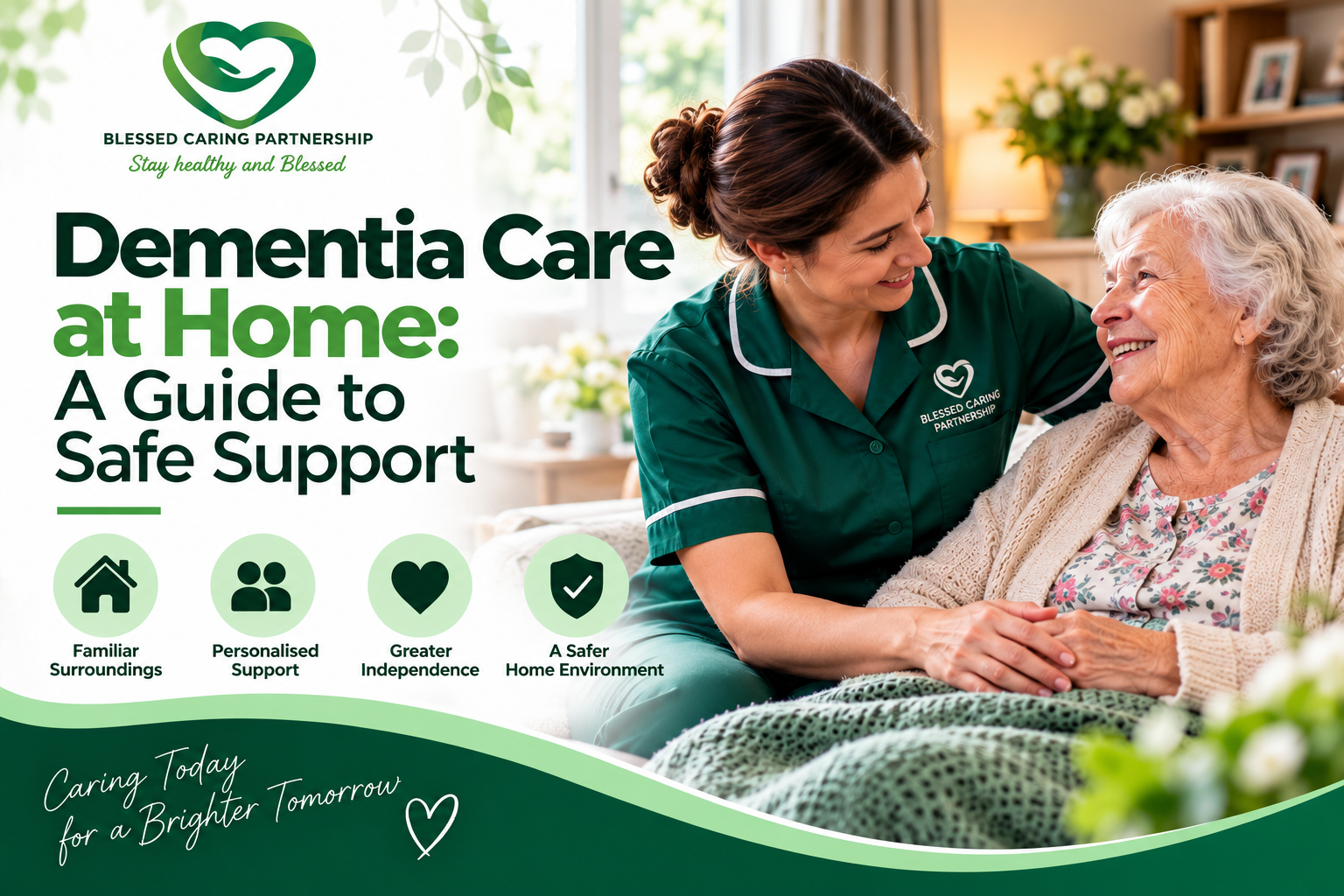
Dementia can affect a person’s memory, communication, behaviour and ability to manage everyday activities. For families, supporting a loved one with dementia can bring emotional challenges and practical responsibilities. With the right care and understanding, people living with dementia can continue to enjoy comfort, familiarity and meaningful moments in their own homes.
At Blessed Caring Partnership, we understand the importance of compassionate, person-centred care. This guide explains how dementia care at home can support individuals and their families, what to consider when arranging care, and how to create a safer and more reassuring home environment.
What Is Dementia?
Dementia is a general term used to describe symptoms associated with a decline in memory, thinking and other cognitive abilities. It can affect how a person communicates, recognises familiar people, makes decisions and completes daily tasks.
Dementia is not a normal part of ageing, although the likelihood of developing certain types increases with age. Alzheimer’s disease is one of the most common causes, but other conditions can also lead to dementia.
Every person’s experience is different. Some people may need occasional help with everyday routines, while others may require more regular support as their needs change.
Why Choose Dementia Care at Home?
For many people, home is a place of comfort, familiarity and security. Remaining in a familiar environment may help reduce disruption to established routines and allow individuals to stay connected with the people and surroundings they know.
Dementia care at home can provide personalised assistance based on the person’s preferences, abilities and care requirements.
Benefits of Home-Based Dementia Care
Familiar surroundings: Staying at home allows individuals to remain around familiar furniture, personal belongings and everyday routines.
Personalised support: Care can be tailored to the individual’s needs, preferences, interests and changing abilities.
Help with daily activities: A care professional may assist with dressing, washing, preparing meals and other everyday tasks.
Companionship and reassurance: Patient communication and meaningful activities can help individuals feel supported and valued.
Support for family members: Professional care can help families share caring responsibilities and find time for other commitments.
The most suitable care arrangement depends on the person’s needs, safety, preferences and available support.
Common Challenges Faced by People Living With Dementia
Dementia can affect people in different ways. Understanding common challenges can help families respond with patience and compassion.
1. Memory Loss and Confusion
A person may forget recent conversations, misplace belongings or become confused about the time or location. Keeping daily routines consistent and using clear, reassuring communication can help.
2. Changes in Communication
Finding the right words or following complicated conversations may become difficult. Speaking slowly, using short sentences and allowing extra time for a response can make communication easier.
3. Difficulty With Daily Activities
Tasks such as choosing clothes, preparing meals or maintaining personal hygiene may become more challenging. Gentle guidance and practical assistance can help preserve independence where possible.
4. Anxiety and Distress
Changes in surroundings, unfamiliar situations or difficulty expressing needs may cause distress. A calm approach, familiar activities and reassurance may help the person feel more comfortable.
5. Safety Concerns
Some people may have difficulty recognising hazards, remembering to turn off appliances or navigating their surroundings. Families should review the home environment regularly and seek professional advice about individual risks.
Sudden or significant changes in confusion or behaviour should be discussed promptly with a healthcare professional, as they may have a cause other than dementia progression.
How to Create a Safer Home Environment
A well-organised home can make everyday activities easier and help reduce avoidable risks.
Keep Walkways Clear
Remove unnecessary clutter, loose rugs and trailing cables where they could create trip hazards. Ensure frequently used rooms and routes are easy to navigate.
Improve Lighting
Good lighting can help individuals recognise their surroundings. Night lights may be useful in hallways, bedrooms and bathrooms, depending on the person’s needs.
Make Important Items Easy to Find
Keep frequently used items in consistent, accessible places. Clear labels or simple signs may help someone identify rooms and belongings.
Review Kitchen and Bathroom Safety
Consider potential risks involving hot water, cooking equipment, cleaning products and slippery surfaces. Appropriate adaptations and supervision should be based on the individual’s abilities and care assessment.
Maintain Familiar Routines
Regular times for meals, rest and activities can provide structure. However, routines should remain flexible and allow for the person’s comfort and preferences.
Families should seek advice from relevant healthcare professionals or occupational therapists when considering home adaptations or specific safety measures.
What Does Dementia Care at Home Include?
The level of support will depend on the person’s circumstances and care plan. Professional home care may include:
Personal care: Assistance with washing, dressing, grooming and other daily routines.
Meal preparation: Help preparing suitable meals and maintaining regular mealtimes.
Medication support: Assistance in line with the agreed care plan and the provider’s policies.
Companionship: Conversation, hobbies and activities that reflect the person’s interests.
Daily routine support: Gentle prompts and reassurance to help with familiar tasks.
Mobility assistance: Support with moving around safely, where included in the care plan.
Family communication: Sharing relevant observations and care updates in line with consent and privacy requirements.
A professional assessment can help determine the type and frequency of support required. Some people may benefit from scheduled visits, while others may need more comprehensive care.
Communicating With a Loved One Who Has Dementia
Communication is about more than words. Tone, facial expressions, body language and patience can all influence how a person feels.
Consider these practical approaches:
Approach calmly and introduce yourself if needed.
Make eye contact where comfortable and reduce background distractions.
Use short, clear sentences and ask one question at a time.
Allow time for the person to understand and respond.
Avoid arguing over forgotten details or repeatedly correcting them.
Offer simple choices rather than overwhelming them with options.
Listen carefully and acknowledge their feelings, even when their recollection differs from yours.
If a person becomes upset, try to understand what might be causing discomfort. Pain, tiredness, hunger, noise or an unfamiliar situation may contribute to distress.
Supporting Families and Family Carers
Dementia can affect the whole family. Relatives may balance caring responsibilities with work, parenting and their own wellbeing.
It is important for family carers to recognise when they need additional support. Sharing responsibilities, speaking with healthcare professionals and exploring local care services may help make caring more manageable.
Professional home care can complement family involvement rather than replace it. Families can remain involved in decisions while receiving practical assistance tailored to their loved one’s needs.
If you are concerned about managing care at home, consider discussing available support with your GP, local authority or an appropriate care provider.
When Should You Consider Professional Dementia Care?
Additional support may be helpful when:
Everyday personal care becomes increasingly difficult.
A family carer is struggling to balance responsibilities.
The person needs more help with meals, mobility or daily routines.
Safety concerns arise within the home.
The person would benefit from regular companionship and reassurance.
Their care needs change and the existing arrangement is no longer sufficient.
Seeking support does not mean a family has failed. It can be a positive step towards maintaining the person’s wellbeing and helping relatives continue their caring role.
Dementia Care at Home With Blessed Caring Partnership
Blessed Caring Partnership provides care services designed around individual needs, dignity and personal preferences. We understand that families want their loved ones to feel safe, respected and supported.
Our team can discuss your circumstances and help you explore appropriate care options. The type of support available will depend on an assessment of the person’s needs and the services required.
If you are considering dementia care at home in Cheshire, Greater Manchester or Staffordshire, contact our team to discuss your requirements.
Explore our care services or learn more about personal care at home.
For a conversation about care options, visit our Contact Us page or call 01625 447799.
Frequently Asked Questions
Can a person with dementia continue living at home?
Many people with dementia can remain at home with appropriate support. The right arrangement depends on their needs, safety, health and available assistance. Care requirements should be reviewed as circumstances change.
What does a dementia carer do?
Depending on the care plan, a carer may help with personal care, meals, daily routines, companionship, mobility and agreed medication support. Responsibilities vary according to the person’s needs and the provider’s service.
How can I make my home safer for someone with dementia?
Keep walkways clear, improve lighting, store potentially hazardous items safely and maintain familiar routines. Individual risks should be assessed, and professional advice may be helpful for home adaptations.
How do I communicate with someone who has dementia?
Use calm, clear language, allow extra time for responses and avoid unnecessary confrontation. Listening patiently and acknowledging feelings can help the person feel understood.
Does dementia always get worse?
Dementia is generally progressive, but the rate and pattern of change vary between individuals and types of dementia. New or sudden symptoms should be assessed by a healthcare professional.
When should I arrange professional dementia care?
Consider additional support when daily tasks, personal care or safety become difficult to manage, or when family carers need help. A care assessment can help identify suitable options.
Conclusion
Supporting a loved one with dementia requires patience, understanding and flexibility. Familiar surroundings, consistent routines and personalised assistance can help make everyday life more comfortable while respecting the person’s dignity and independence.
If your family is exploring dementia care at home, Blessed Caring Partnership can help you discuss your needs and consider suitable care options. Contact our team to learn more about compassionate support for your loved one.