








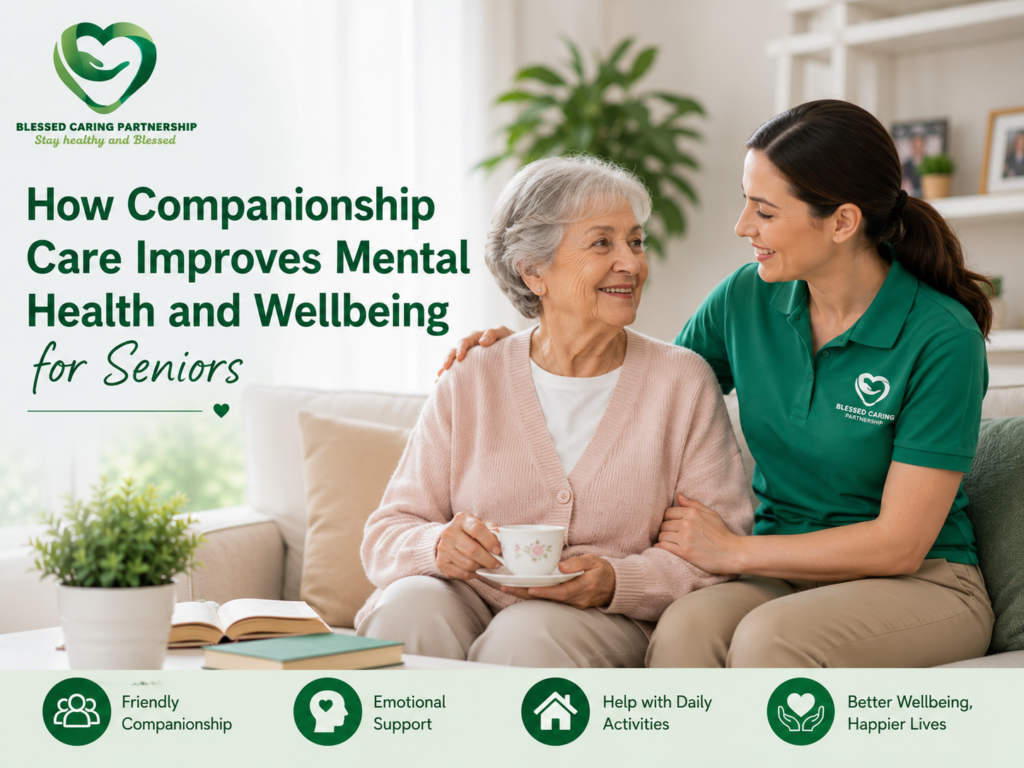
As people grow older, maintaining emotional wellbeing becomes just as important as maintaining physical health. While many seniors receive support with daily tasks and medical needs, emotional care is often overlooked. Loneliness and social isolation can have a significant impact on overall health, making companionship care an essential part of quality home care.
Companionship care focuses on building meaningful relationships, encouraging social interaction, and helping older adults stay connected with the people and activities they enjoy. It offers much more than simply having someone nearby—it provides friendship, emotional reassurance, and support that enhances quality of life.
At Blessed Caring Partnership, we understand that compassionate companionship helps seniors remain independent, confident, and happy while continuing to live in the comfort of their own homes.
What Is Companionship Care?
Companionship care is a non-medical home care service designed to provide emotional support, social interaction, and practical assistance for older adults who may feel isolated or need extra help during the day.
Professional caregivers spend quality time with clients, helping them stay engaged and connected while encouraging independence.
Companionship services may include:
- Friendly conversations
- Playing games and hobbies
- Reading together
- Accompanying clients on walks
- Shopping assistance
- Attending appointments
- Meal preparation
- Light housekeeping
- Emotional support
- Help with technology and video calls
Unlike medical care, companionship focuses on improving emotional wellbeing and reducing loneliness.
Why Loneliness Can Affect Senior Health
Many seniors live alone after retirement or the loss of a spouse. Family members may live far away or have busy schedules, making regular visits difficult.
Studies have shown that prolonged loneliness can contribute to:
- Anxiety
- Depression
- Memory decline
- Poor sleep
- Reduced physical activity
- Increased stress
- Lower confidence
- Reduced quality of life
Companionship care helps prevent these problems by providing regular social interaction and emotional encouragement.
Encouraging Social Interaction
Regular conversations and meaningful activities help seniors stay mentally active and emotionally engaged.
Caregivers encourage social interaction by:
- Sharing conversations over tea
- Playing cards or board games
- Reading newspapers or books
- Watching favourite television programmes
- Gardening together
- Listening to music
- Visiting local parks
- Supporting community activities
These simple moments create lasting emotional benefits and help seniors remain socially connected.
Supporting Mental Health
Mental wellbeing is closely linked to physical health.
Companionship caregivers provide reassurance, encouragement, and positive interaction that helps reduce feelings of stress and loneliness.
Benefits include:
- Greater emotional stability
- Increased confidence
- Improved mood
- Reduced anxiety
- Better self-esteem
- More positive outlook on life
Having someone who genuinely listens can make a significant difference to someone’s emotional health.
Promoting Independence
Companionship care is designed to support independence rather than replace it.
Caregivers encourage seniors to continue participating in daily routines while offering help only when necessary.
This approach allows individuals to:
- Make their own decisions
- Continue favourite hobbies
- Stay active
- Maintain routines
- Build confidence
Remaining independent helps preserve dignity and self-worth.
Assistance with Everyday Activities
While companionship care is primarily focused on emotional support, caregivers can also provide practical assistance such as:
- Grocery shopping
- Collecting prescriptions
- Meal preparation
- Light housekeeping
- Laundry
- Transportation to appointments
- Organising medications
- Running errands
These services help seniors continue living comfortably and safely at home.
Peace of Mind for Families
Families often worry about loved ones who spend long periods alone.
Knowing a trusted caregiver is regularly visiting provides reassurance that someone is monitoring both emotional and physical wellbeing.
Families benefit from:
- Reduced stress
- Improved communication
- Confidence in professional care
- Regular updates
- More quality family time
Why Choose Blessed Caring Partnership?
Blessed Caring Partnership provides compassionate companionship services tailored to every individual’s unique needs.
Our caregivers focus on:
- Respect
- Kindness
- Reliability
- Emotional support
- Independence
- Dignity
- Personalised care
We believe every senior deserves meaningful companionship that improves both happiness and quality of life.
Conclusion
Companionship care plays an important role in helping seniors maintain emotional wellbeing while continuing to live independently at home.
By providing friendship, conversation, practical support, and encouragement, professional caregivers help reduce loneliness and improve overall quality of life.
Whether your loved one needs a few visits each week or regular companionship, compassionate home care can make every day brighter, safer, and more fulfilling.
Frequently Asked Questions (FAQs)
1. What is companionship care?
Companionship care is a non-medical home care service that provides emotional support, conversation, social interaction, and practical assistance for older adults.
2. Who can benefit from companionship care?
Older adults living alone, individuals with limited mobility, people recovering from illness, and anyone experiencing loneliness or social isolation can benefit from companionship care.
3. What services are included in companionship care?
Services may include:
- Friendly conversation
- Meal preparation
- Shopping assistance
- Light housekeeping
- Accompanying appointments
- Walking support
- Hobbies and activities
- Emotional support
4. Does companionship care include personal care?
Companionship care mainly focuses on emotional support and daily assistance. Personal care services such as bathing and dressing may be provided separately depending on the individual’s care plan.
5. How does companionship care improve mental health?
Regular social interaction helps reduce loneliness, anxiety, and depression while improving confidence, emotional wellbeing, and overall happiness.
6. Can companionship care help people with dementia?
Yes. Professional companionship caregivers provide routine, reassurance, conversation, and engaging activities that support individuals living with dementia alongside their personalised care plan.
7. How often can companionship visits be arranged?
Visits can be arranged according to individual needs, whether for a few hours each week, daily visits, or ongoing support.
8. Can caregivers accompany seniors outside the home?
Yes. Caregivers can accompany clients on walks, shopping trips, medical appointments, social activities, and community events.
9. Is companionship care suitable for seniors who live with family?
Absolutely. Even when living with family, seniors may benefit from additional companionship during the day while family members are at work or managing other responsibilities.
10. Why choose Blessed Caring Partnership for companionship care?
Blessed Caring Partnership provides compassionate, reliable, and personalised companionship services that help seniors stay emotionally connected, independent, and comfortable in their own homes while giving families peace of mind.